Travel medicine related to field work or work-related travel, within the United States and abroad, is covered by the SUOHC. Biosafety is often consulted for help with risk assessments. Any student or staff doing work off Stanford campus or farther afield should make an appointment with the SUOHC to discuss their work, any travel risks, and travel-related medicine, as well as how personnel health history might affect travel recommendations. This also includes any incidents, accidents or exposures that happen during travel. Personnel should seek appropriate medical attention as necessary during travel, and consult with SUOHC upon their return to campus. Travel registration with the Office of International Affairs (https://international.stanford.edu/) is also highly recommended to aid with any medical or travel issues.
Risk considerations for travel and field work include what work is done and where (e.g., location and duration of stay or work), physical setting (e.g., terrain and proximity to water), the work being done (e.g., involvement of animals, chemicals, potential for dermal or respiratory hazards, etc.), access to engineering controls, and risks not specific to the work but specific to the location. These risks can include animals in the area, endemic infectious agents, political or local concerns, natural disaster potential, etc. Personnel engaging in travel and field work are advised to be aware of their surroundings, availability of local health care, and any specific issues or hazards associated with the work or area.
Field work also presents some unique considerations for work in general, including exotic zoonotic concerns and importation of samples or animals into the United States or California. Specific quarantine measures may need to be implemented for any wild animals brought to vivarium or other housing locations on campus (contact the VSC for specifics well in advance of bringing animals to campus), and permits may be required if animals are from outside the state or country. Additionally, samples may also need permits for importation, even if live animals are not present. Contact Biosafety for further information regarding the specific requirements for your particular work.
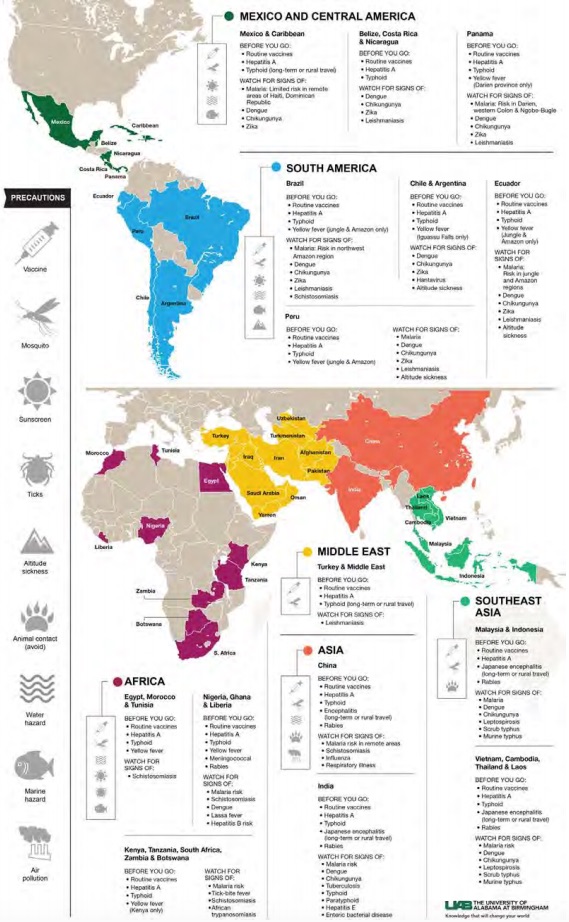
Specific medical recommendations to be determined post consultation.